

She recognized the rumblings of another war. She pieced jigsaw fragments together slowly, but a clear picture was emerging. If other citizens paid attention, which was rarely the case, they’d notice the escalation of political threats and militaristic intimidations, the bombastic chest pounding of national leaders, echoes among their pathetic imitators, the relentless amassing of multi-billion dollar weapon systems in warrior nations across the globe, the off-budget acceleration of clandestine operations destabilizing helpless governments, even targeting segments of their own population, sowing economic and civil chaos in the distorted name of Human Rights or Territorial Integrity.
To most, the hints seemed obscure or irrelevant. They remained oblivious or immune or numb to the likelihood of trouble, even catastrophe. The patriotic pap spewed by commentators and parochial orators on all sides, the hedonistic diversions everywhere to non-stop sport, reckless gambling, addictive streaming, and anti-social irrelevancies, the indifference of all but the profiteers to increasing military appropriations, dominated national and international “news.” Partisans hotly debated distracting side issues of little consequences or wallowed in blind apathy.
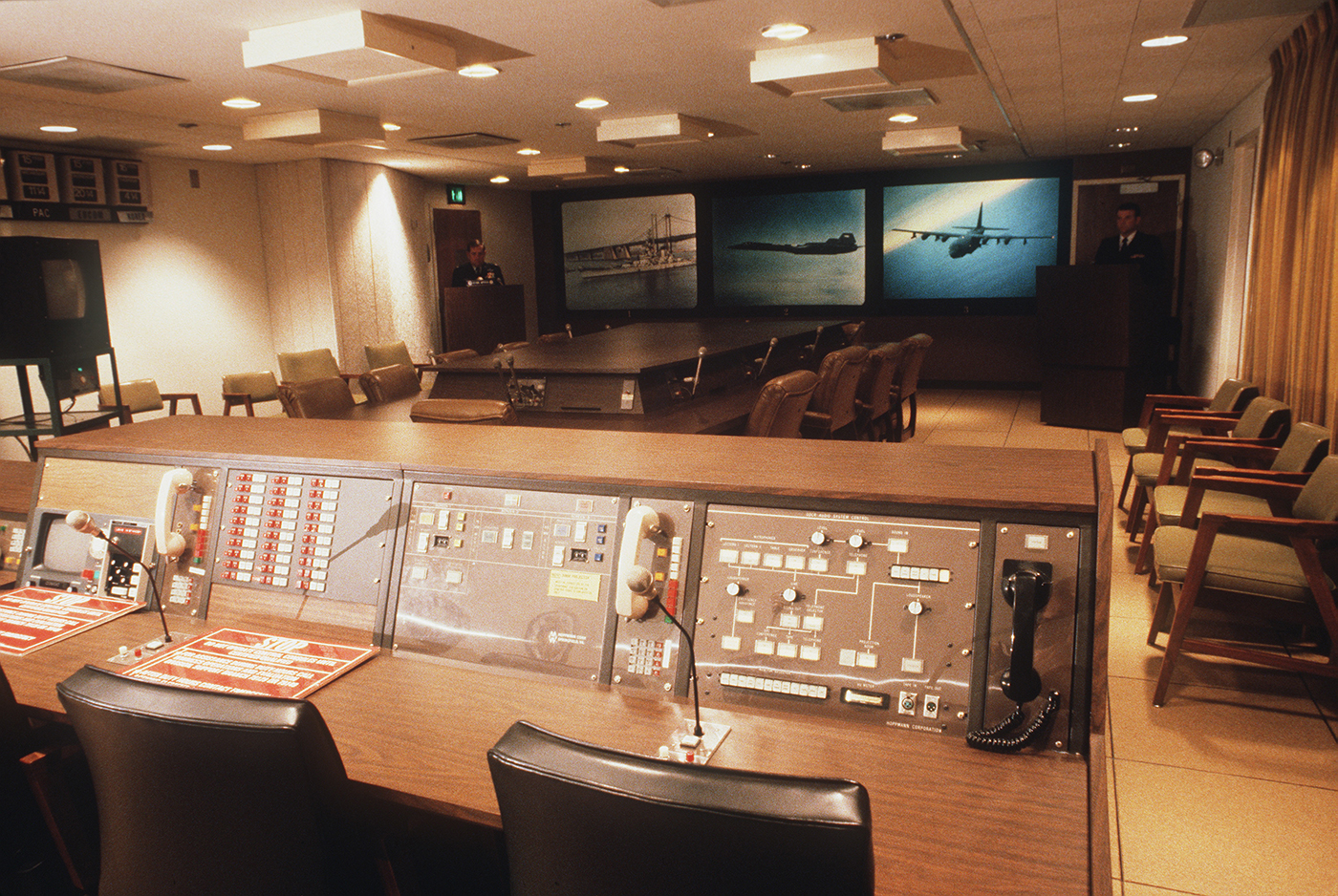
Sonya had an inside seat as a “defense analyst” in one of her nation’s secret underground command centers. She was expert in her niche job, twenty years a multilingual interpreter of foreign news, obscure foreign governmental documents, and intercepted electronic transmissions. Unbeknownst to her bureaucratic bosses, she also was what the intelligence crowd and power brokers called an “infiltrator,” an unreliable intellectual with “peacenik” leanings. While she apparently helped them plan and prepare for the next inevitable conflict, what they called “national defense,” she was adamantly opposed to all wars, because she knew in her still young wisdom that in the end there never are victors, only victims, and death is death, be it from saber or missile.
Her connection with the “anti-war dissidents” was as deep as it was hidden from the militarists, reaching back to her first year in college, when she met Ben in her World History Seminar. They had quite dissimilar backgrounds, she a “first-generation” child of “illegal immigrants” from a land long ravaged by generational war, he the great-grandson of Jewish refugees of conflicts and pogroms that sent too many of his ancestors to their violent death, most lately in the unspeakably evil concentration camps of Europe. Both were destined to the top of their class, both dynamic thinkers, and singular personalities, both hated the senseless killing of the millions of innocents who made up the "slaughter house" of history, as the philosopher Hegel called it.
Sonya also had a deep desire for success and affluence that had eluded her people, so she prepared herself in several academic fields from linguistics to business. He was already heir to affluence and dabbled broadly to expand his mind and knowledge, confident that he had a secure business seat waiting for him whenever as prodigal son he returned. Yet they felt a natural affinity and attraction, connected, intellectually, and eventually romantically. Both strived for excellence. Both wanted to fit in with the greater culture they distrusted and that distrusted them, so they kept their opinions on politics, their passion for justice and peace somewhat concealed, but still contributed extra time to the anti-war causes that appeared on campus.
The coming war would not be like others, the two covert dissidents conjectured, for it was too dangerous now for them to be anything but covert. Dissenters no longer were tolerated by society. They were isolated and labeled threats to “internal security.” They understood this war would not be fought with tanks whose production had drained national treasuries for decades. Regimental movements of troops sacrificed like pawns were obsolete, bombers would be blown out of the sky, ground artillery destroyed when they inched closer to their targets. Even fleets of drones or terror techniques of civilian massacres so familiar to the contemporary world or its histories of mutilation and extermination were useless. Missiles and armies of lethal robots had been eclipsed by new space weapons systems.
The attacks, it was becoming clearer to them both, would come through digital and laser satellite neutralization of critical infrastructures, energy and banking exchanges. Electromagnetic surges, EMPs, would destroy electrical grids, transportation systems, food distribution networks. These surprise attacks would victimize entire populations that would be immobilized and unable to recover fast enough to avoid millions of deaths. Energy supplies would face mass disruption and mass starvation would be hard to avoid, even if reconstruction was rapid. National targets would sue for relief with barely a shot fired, unless in reckless desperation and anger the targeted nations let fly their arsenals of thousands of nuclear warheads bringing on “nuclear winter” for those unlucky enough to survive first hits. “Better dead than Red,” one old slogan proclaimed. “Death to the Imperialists” another insisted, “Homeland Security.” AI systems were still at a stage where they would follow rather than refuse orders, and they would cut their own throats, eliminate sources of electric power, go silent. Or all would happen simultaneously.
In April of that year, as cherry blossoms filled Washington with an exotic fragrance and deceptive beauty, Sonya began to decipher disturbing developments of the final triggers. She knew her government knew that “enemy nations” and rogue independent actors were planning another “surprise attack,” this one more lethal. Her nation’s leaders were deciding whether to strike first. The high stake calculations added to mass destruction either way. Morality was not even in the equation. Survivability was a random calculation.
“We’ve got to do something,” she pleaded with Ben when they “accidentally” met in the National Gallery of Art. They sat on an oak bench pretending to admire Venus with a Mirror by Titan. Beauty and Love had refashioned themselves in the form of a goddess spawn from nothing but inert nature. Venus stared vainly at her own splendor, unaware that both ideals were about to be obliterated by their opposites. Hatred and cruelty were set to shatter the mirror held by the cherub. And Venus, prototype of human grace, would succumb to her own ignorance and self-absorption.
“At any time now,” she whispered.
“God no! What can we do?”
She stared at him for a long moment.
“If we sound a public alarm, we’ll be detained, imprisoned, and sidelined,” Ben muttered so the room of art admirers couldn’t hear.
“Then we have to act some other way.” Sonya reached down and brushed his hand. They had not seen each other in months. Of course, she had been careless coming to the Gallery, being seen with him. But she had to see him before whatever happened, happened. She didn’t care anymore who knew. She may be a traitor to her warrior nation, but she would not betray Humanity.
He had been tracked on the train from New York City, his every move recorded. He was considered dangerous because of his firm’s political contributions over the years, as moderate as they were. Their “chance meeting,” the national automated tracking system already knew, was anything but random. Their appearance together meant she had to be neutralized. She knew too much, obviously had been leaking information to him and the peace network that he still informed.
“What can we do?” He brought his hands to his head and cradled it there for a moment in despair. “I can go to the news and blow the bugle. I can get interviewed any time I want on ‘The International Business Hour.’ But whatever I say that causes controversy will be edited out, and then that’s it for me. I’ll be harassed, prosecuted on trumped up charges, my business destroyed.”
“You can’t chance that. I forbid it. Maybe I’m wrong.” She always had felt protective of him. He sometimes seemed to lack an instinct for self-preservation, was a kind of bohemian at heart. Yet he had access to an audience that she didn’t have. Someone had to scream the truth. War was coming, coming soon.
He looked at her and sadly smiled. She always controlled his heart. He should have married her years ago. But she was too independent, too insistent that she had to go her own way. Then when job openings became scarce, she accepted the Agency’s offer, just for a while she told herself. It wanted her language skills. Then she saw how she had access to information others could use to slow the war machine. It was her who leaked the news about the three billion dollar subversion of Russian oil fields. It was her who leaked the news of the secret Chinese deal planning the partition of India. They suspected, but never had enough proof, and she was so valuable with her institutional history and linguistic instincts.
“What about Hoover?” she asked. “Are you still in touch with him?” Hoover had led the peace demonstrations when they were in school, had shut down the whole university for a week their senior year, was big in the international peace movement before the authorities planted explosives they ‘discovered’ in his basement and he had to go into hiding two years earlier.
“I can get a message to him. But why? He’s still underground. Besides, what could he do?”
“Maybe he can mobilize some resistance. Start a national strike or something, inform others, start a ruckus.”
“You know that’s no longer possible. As soon as he surfaces or makes contact with the others, they’ll grab him. Anyway, he’s been discredited by the constant propaganda after he organized that last munitions plant strike. Then they broke it, arrested all the leaders, lied that he informed on them. They even believed that! He doesn’t have the credibility he once had. It’s too bad.”
Sonya noticed a woman in blue jeans and a white cotton blouse staring at her from the entrance to the Seventeenth Century Flemish paintings room. “I’ve got to go. I think someone is on to us. Are you in town long?”
“A two day conference on Informatics at the Hilton on Connecticut. Room 1113. Come by tonight after 11. Knock twice.”
“I don’t know Ben, it already may be too late. Things are accelerating, spinning out of control in the decision rooms and the public has no idea.”
“We’ll discuss all this tonight. I’m going to walk into the next room to look at a Breughel and then leave for my conference. You stay for a few more minutes.”
“No,” she shook her head afraid she’d never see him again. “I know what I have to do.”
“What? Don’t expose yourself. We’ll talk it through tonight. We can come up with something. Don’t jeopardize everything yet.”
“I’ll send out warnings in multiple languages, script some news disruptors. Call for an emergency peace summit, contact UN heads. Try to cool it down. That could buy time.”
He stared at her, afraid to say anything.
“Of course I’ll be arrested. But if I can delay things…” she was afraid of what she was saying. “What choice do I have?”
“You can’t do that. No. Please. Let’s brainstorm tonight.”
She looked up. The woman who had been watching them was approaching. Sonya stood and turned.
The Gallery lights flickered, went dead. People froze, glanced down at their phone screens that had gone blank.
“Too late,” Sonya managed to shriek as the yellow red eruption blinded them. He had tried to grab her hand, but even the air burned.
-- R. Craig Sautter is author, coauthor, or editor of 11 books, including two of poetry: Expresslanes Through The Inevitable City and The Sound of One Hand Typing. His short stories have appeared in Chicago Quarterly Review, Evening Street Review, Catamaran, Deep Overstock, Neon Garden, and Valiant Scribe. At DePaul University, he's taught courses in philosophy, politics, history, literature, and creative writing. He served two terms on the Abraham Lincoln Presidential Library Advisory Board.