

It had been fifty years since the hot water tank took seven, since Mason lost his hearing and his job. Half a century of silence. Five decades of living in his sister's shed, of not looking in mirrors, of kids stopping to stare at his melted wax flesh, of parents tugging the arms of their children to teach them that good manners meant averting their eyes from the maimed, to ignore the scars of the disfigured.
Talk amongst the school board and grieving parents about taking legal action over the improperly maintained water tank concluded in the decision to let Mason live out the rest of his days ugly, scarred, and marred with hands stained in blood. They believed this would suffice as punishment. So he served his sentence in solitude, taking solace in the silence of his sister’s shed among the tools of his father Hiram, who had laid the brick of the school with the artifice of a master craftsman.
In the perpetual silence in which sound was a memory, he heard the voices of the dead kids carry in the wind—carry him towards the red brick facade that held the memories of what he thought would be the final sound: a high-pitched whine that subsided into the fifty-year silence.
The songs of the slain shattered that all-pervading silence. Their sweet, syrupy voices seeped through the foliage of the trees and led him to the school built by the hands that had held him as an infant. Mutilated children played in the unkempt schoolyard. Girls with seared flesh jumped rope in calico dresses. Steam rose from the ruffled trim of their garments. Ghost boys chased one another. The one-legged boy lost to his bipedal peers.
The bell rang.
Children ran into the school.
Mason followed.
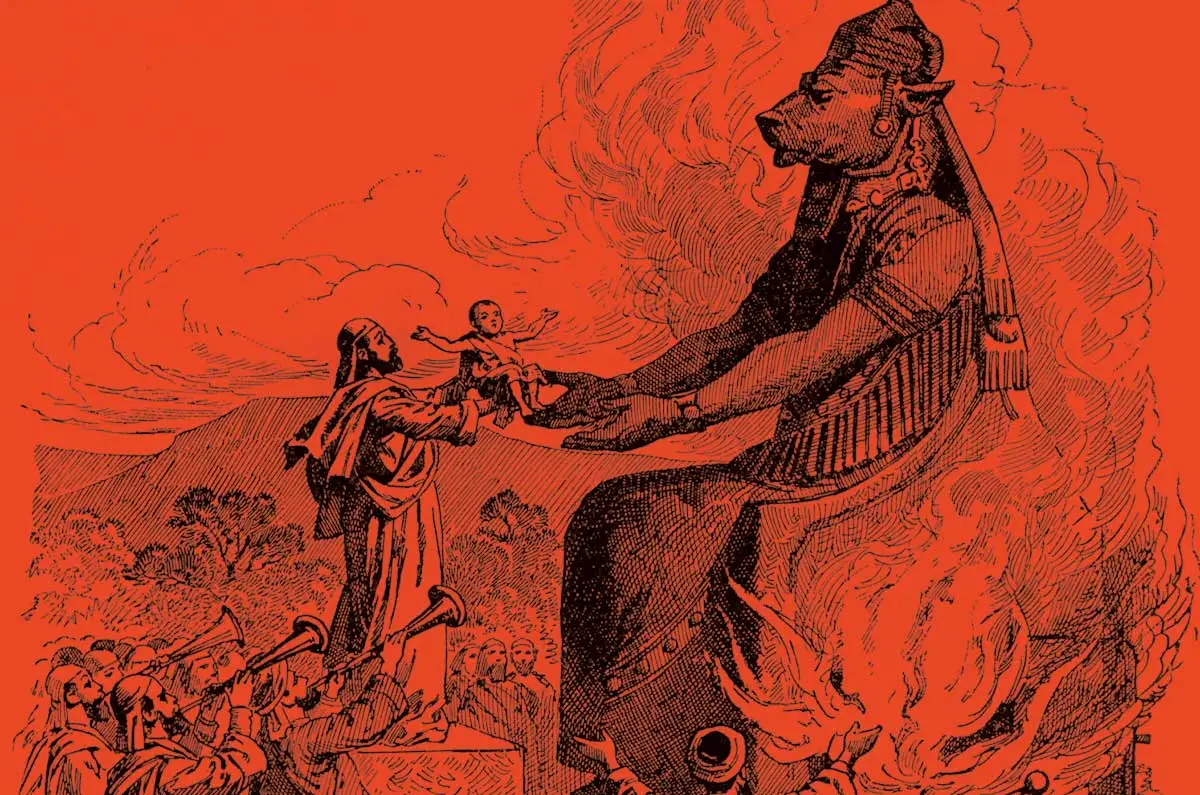
Inside was the man with the bullhead of brass, his bovine tail limply swaying as his arms stretched out over the concrete rubble and insulation tufts. The Bullman’s eyes glowed vermillion as did the flame the children ran towards.
The Bullman spoke without speaking.
He was hungry.
Mason fed the Bullman dogs he found sleeping on sunbaked red dirt roads, and stray cats that took to the food he lured them with.
The Bullman’s frame grew gaunt.
The cats would no longer do.
Skin for skin.
Wandering the town marked like Cain, he found his skin. She was catching frogs in the drainage ditch, hidden in the bowels of the concrete serpent that cut through the earth. Her Mary Jane shoes failed to gain traction on the moss-slickened ground of the ravine. She was as mute as Mason was deaf when he seized her—his new garment—in his hands.
Mason made his way to the school left abandoned—to the altar of flame and pulverized stone. The checkered linoleum held scuffs left by the soles of the children who once roamed the halls. Teens had left the building covered in graffiti: pentagrams, swastikas, and numbers to call for a good time. Beside the spray painted symbols were motivational posters, glass display cases housing trophies, and cerulean monarchs painted in acrylic.
The girl was coming to as Mason traversed the linoleum littered in cigarette butts, discarded beer bottles, and marijuana ash. The Bullman stood amidst the semicircle of stone. In the glow he saw familiar faces.
The faculty chanted in a strange semitic tongue.
Skin for skin.
Those entrusted to care for the little ones fed the Bullman.
With taloned fingers the Bullman pierced the flesh of his chest, ripped through the fascia and muscle, and revealed the furnace inside the cavity and its tongues of fire. As the chanting reached its crescendo, the gaping wound grew, and expanded until it swallowed the world whole.
Mason found himself in the Valley of Hinnom. In the midst of the sweltering bowels of the serpent world Hiram stood haggard, clothed only in an apron that did little to conceal his nude form. His gnarled hands laid stones that glowed as embers. As he approached the cobbled well, Mason realized he could hear the voices of the fallen angels his father was walling off.
Mason looked into the sky. Above the wall of flame stood Mount Zion. At the mountain's crest was Abraham, surrounded by children with glowing garments of skin anew. Gentle rain fell onto the wildflower-studded peak. The angels who had delivered the children to the care of the patriarch of old descended the mountainside with a millstone in hand. Mason knew what he was to do. He stepped onto the ledge of the cobbled wall that had shielded him from the abyss. The foremost among the angels fastened the millstone around his neck, weaved the chain around his body, and returned to the blossoming hilltop fertilized by the tears of those who mourned the children.
Mason stepped into the deep.
He realized that hell was not the flames.
Hell was to descend towards nothingness, to approach becoming that nothingness, and to never feel the satisfaction of being
nothing.
-- Luke Marshall is a 25-year-old living in rural Oklahoma. You may know him as the host of the Things Observed podcast or from his appearances on shows like Programmed to Chill. When he is not spending his time as an amateur historian on all things concerning parapolitics, esoterica, and high strangeness, you can find him writing fiction, tending to his garden, or visiting friends and family.