

Battle of the Frontiers
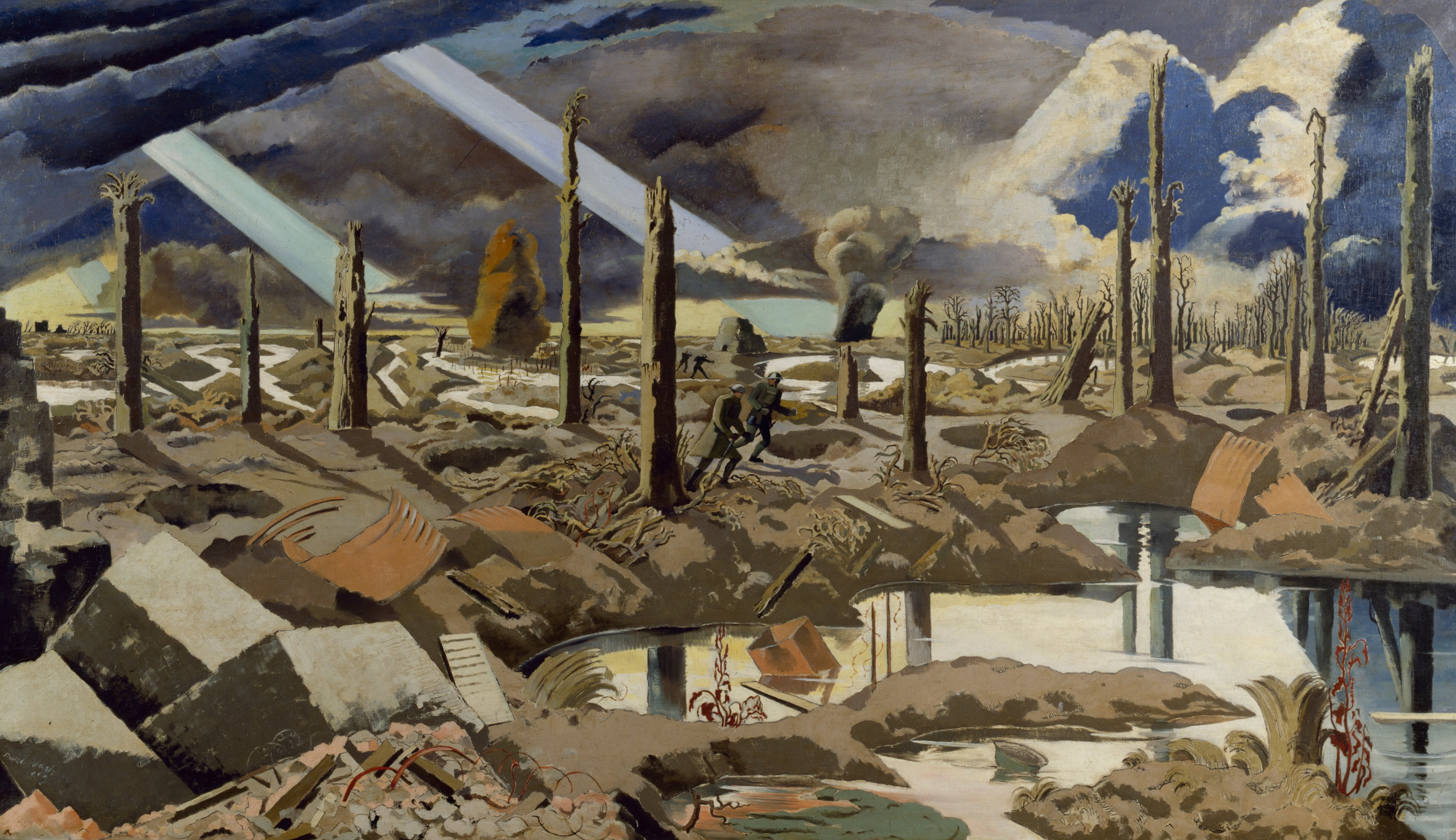
Necromancers don't often visit the site of great victories because there is no need. The Battle of the Frontiers—with over 300,000 Frenchmen dead for no ground captured—is not a great victory. The Necromancer arrives from England too late. The French army has marched directly into artillery fire while wearing bright red pantaloons. There are no suitable remains. The army will repeat the mistake of charging into fortified enemy positions, but not the red pantaloons.
Race to the Sea
The Necromancer earns his keep during the Race to the Sea. Wars are usually a contest of killing, but this is a contest of trench digging from the outskirts of Paris to the English Channel. The Necromancer enlists every corpse in a 20-kilometer radius with functioning arms to help dig trench lines to keep pace with the Germans. A cadre of legless cadavers claw at a clay deposit. A colonel in a commandeered automobile—a novelty to the Necromancer who can't afford such a thing on a junior officer's pay—drives him to a local cemetery to raise more conscripts. Even the dead have not seen the end of war.
Machine Guns
Trenches are dug and the war slows down. For all the fuss made over machine guns, the Necromancer doesn't mind them. True, they tear through muscle and sinew and tendon. But the Necromancer can often raise a man felled by machine gun fire to fight again. Maybe two or three or even four times, depending on the specific nature of the mortal wound. A corpse is only useless when it can't move or shoot.
"Try to get shot in the chest, lads. Corpses need arms and legs more than they need hearts and lungs," the Necromancer tells the men before they go over the top.
Artillery
Artillery is the true terror. First, it's loud. Second, it leaves little for the Necromancer to work with. Can magical energies reanimate bone chips and nondescript mounds of flesh? Naturally. Can bone chips and nondescript mounds of flesh fight worth a damn? Not quite.
The Somme
A disaster. By the end, so few adequate corpses remain that General Haig personally orders the Necromancer to travel through France, resurrecting soldiers buried in mass graves from prior wars. Gallic barbarians. Roman legionnaires. Frankish knights. All torn from the grave and forced to shamble toward the enemy trench to keep the offensive going for another paltry few hours before it dies. A shame deceased strategies are not so easily resurrected as men.
Mutiny
Half of all French frontline forces mutiny after the Second Battle of the Aisne. They refuse to attack. The Necromancer's days grow boring, and he worries that without much use he'll be demoted. General Pétain takes over and compromises with the men, ending the standoff. The war resumes. The army doles out over 600 death sentences but ultimately executes fewer than 50 men. The Necromancer is ordered to resurrect them over and over to be killed in a variety of ways. The military police do not live up to this promise and simply execute the mutineers by firing squad each time until their worldly remains are paste. The lack of imagination disappoints the Necromancer.
Spring 1918
The German army's final thrash. The Necromancer's busiest period of work abruptly followed by the height of quiet. The German army evaporates in the field throughout the summer. By September, the arthritic trenches loosen. The war is becoming mobile again. A shame. The Necromancer hates marching.
Victory
The war ends on the 11th hour of the 11th day of the 11th month of the year 1918. By the Necromancer's estimation, he has resurrected over one million men to serve in Her Majesty's armed forces throughout the last four years. When the armistice is signed, the Necromancer commands any and all still-reanimated corpses to dig a mass grave and pile in. He deactivates the magical energies reanimating them and their service finally ends.
Interbellum
The Necromancer makes a killing in postwar England—a time and place rife with organized labor disputes—as a strikebreaker. Why negotiate with miners when the Necromancer will raise a whole cemetery to work the mines and keep the coal coming for a fraction of the cost?
Death
The Necromancer, now in his early 40s, finds himself yet again at the front lines. But his abilities are uniquely unsuited for a war of movement and machines. A German dive bomber strikes his position during the blitzkrieg through the Low Countries in spring 1940. There are no remains.
-- Matt Wolfbridge is a writer, reader, and typewriter collector. His fiction has appeared in Flash Fiction Magazine and The South Shore Review. He has published nonfiction in Salon, The Week, The Daily Dot, and BuzzFeed under another name. He is currently a student at the University of Southern Maine's Stonecoast MFA program where he is an editor at the program's literary journal, Stonecoast Review. See his typewriter collection on Instagram (@matt_wolfbridge) or visit MattWolfbridge.com.