

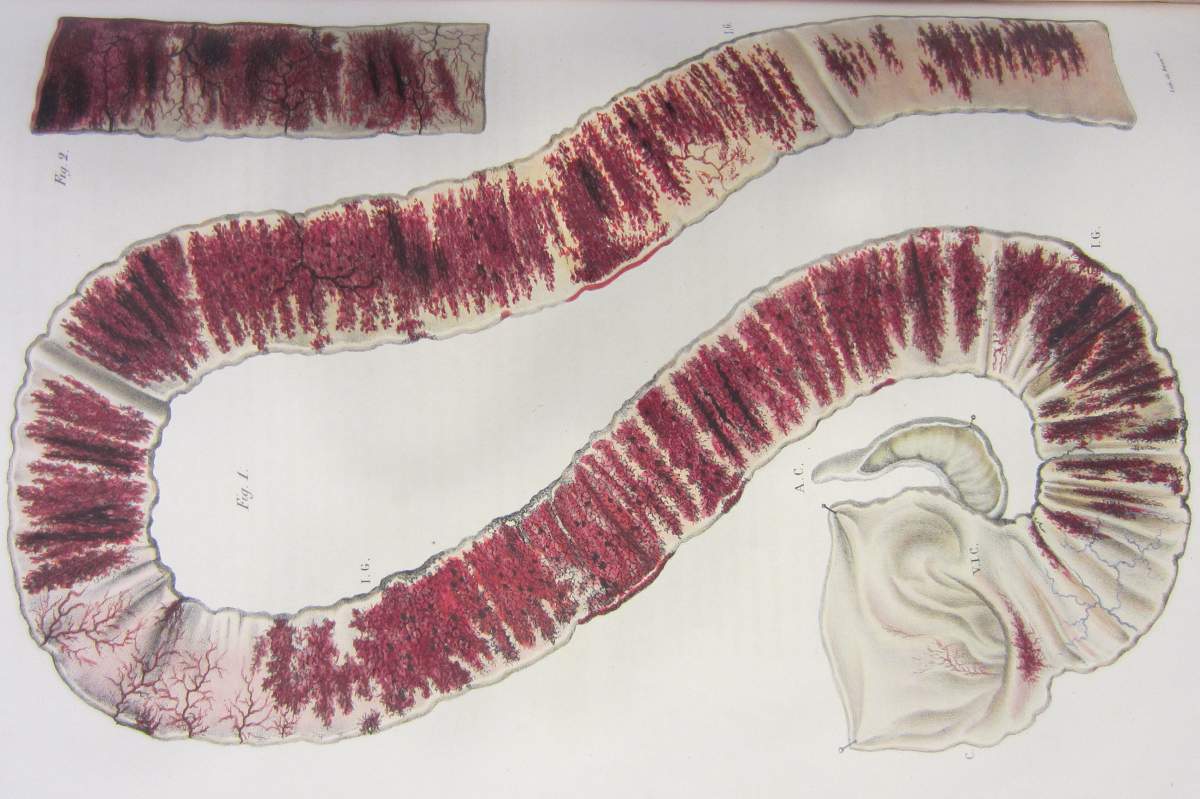
"People who are not in love fail to understand how an intelligent man can suffer because of a very ordinary woman. This is like being surprised that anyone should be stricken with cholera because of a creature so insignificant as the comma bacillus."
-- Marcel Proust
I kissed her goodbye, so she’d remember. Our hearts flipped and our tummies rumbled.
A slow-moving swarming caterpillar of humanity had groaned to a final stop in front of us. Closer inspection revealed the rough shape of a train. The Doon Express, in the flesh. Baggage and people surged off, and jostled back onto the overflowing roofs of the coaches. I pushed into the teeming mob where I thought a carriage door might be, and eventually found myself scrunched up in a roof rack space that, only a moment before, had been a large jute bag of rice. A big dragonfly was caught in the light housing beside me. I wondered why I had even paid for the same amount of space. After three hours of yogic torture (more enjoyable with dysentery and nowhere for the cramps to go), I emerged onto a sea of sleeping pilgrims and a maze of turnstiles. Gaya, literally, The Demon. Lord Vishnu had left a sacred footprint somewhere near here. I never found it. Three others were thought to have created the belt of Orion. Vishnu. Nothing. Vishnu with you.
In the station darkness, I could just make out the silhouettes of uniformed officials sticking sharp objects into the arms of fellow disgorged passengers, in the line ahead of me. As the queue advanced it became apparent that, while the syringes were occasionally changed, the needles were not. Then, much too soon, it was my turn. A hand grabbed my left arm. My right hand grabbed his.
“What’s going on?” I inquired.
“Oh, nothing,” he responded.
“Then why the injections?” said I.
“Only little problem,” he offered.
“What little problem?" I asked. Because now I was curious.
“Only little cholera.” He finally admitted.
“I probably already have cholera," I said. And he let go.
The Ajatsutra across the street charged me thirty rupees for a double, with no water to wash away my loostoolspatter. By this point, hitting the fan, it was all one word. I realized that, in my next life, I was coming back as a fly.
The next morning, after an omelet and chai, I headed for more holy shit. On my way towards the bus station, a rickshaw walla, with a crew cut and a ponytail, sidled up alongside. He spoke no English, but we finally negotiated a price that, I had thought, would take me to the terminal. It seemed a little exorbitant, but he assured me with backhand gesturing that my destination was a long way off.
I climbed on up, and he began to trot along bumpy rugged streets, and then the ghats and temples and banyans along the sylvan banks of the Falgu River. His ponytail bobbed in rhythmic synchrony with his trot. Local boys ran alongside, and a bicycle rider pleasantly practiced his English, until he turned off.
As the road smoothed, I gazed up, under and through the saccadic branches of sunlit leafy mimosas, to the cottonball clouds beyond. It became a drug, the perfect soporific calm of the little mechanical noises, warm air resistance, and rolling glide through the Bihar countryside. Sun-splattered tranquility. I awoke to the sight of rivulets of perspiration running down a naked back, running around a sacred pool, along a river lined with coconut palms and umbrella’d monks, against a floating landscape of rice paddies receding into distant mountains.
We pulled onto the main street of Bodhgaya before I realized he had run, not to the bus station in Gaya, but to my ultimate destination of the day, thirteen kilometers away. For seven rupees and a Limca, which he drained in one gulp.
I wandered the skyscraper temples, mesmerized by the frescoes, wreath-laden chanting pilgrims, birds, white scarf serenity and the most venerated tree on the planet.
Ficus religiosa, a third generation descendent of the original Bodhi tree, under which Siddhartha Gautama had attained enlightenment two and a half millennia earlier. A handful of leaves the priest handed me would ultimately make the journey to my library.
It took Siddhartha three days and three nights of meditation to achieve insight, the same length of time it took Jesus to achieve reincarnation and roll away the rock occlusion to his cave. It took me three hours, tops.
After my class under the Bodhi tree, I paid my respects to Gautama and his mother, draping their images with white muslin and five-rupee notes. I left the Mahabodhi Complex for the searing heat, and the other temples scattered along the dusty trail. The Tibetan temple was colorful and had an impressive law wheel fresco; the Chinese temple felt neglected, the red-tiled Thai temple was sharply sloped with golden atmospheric projections, and the Japanese pagoda’s highlight was a Buddha of serene proportions.
My Limca rickshaw wallah had waited for my enlightenment and jogged me another thirteen kilometers back to the Gaya station. Dysentery had taken over the planning for my next reincarnation from Destiny. I spent most of my time, waiting for the Bihar Express to Patna, in the toilet, slowly working my way through an entire Bihar newspaper. No reading activity was involved. The station manager fished what was left of me out of my squat and advised me to find a seat on the train. This would not be easy. This would be impossible. There was a difference between the Orient Express and the Bihar Express. There were not whole cities occupying every carriage on the Orient Express.
My previous day’s tactics got me into the interior of the coach, but I had to dislodge three jute bags off an overhead luggage rack to find any space at all. The owners were unimpressed. Drove my karma to the dharma but the dharma was dry.
The fans didn’t work. The overhead light bulb in my face went stroboscopic. The train lost its race with the humidity and its appellation. The only "express" thing about it was the wish to die and the temporary gratitude for its arrival in Patna.
In the last year of his life, Buddha passed through this place, bestowing on it a double prophecy. Patna would have a great future but, at the same time, it would experience ruin from flood, fire, and feud. I had clearly arrived during the second prediction. The station platform was in full flood and looked like Kafka and Conrad had collaborated on a design for an overcrowded refugee camp. In a surging swell of cacophonic cotton, my height was the only thing that saved me from drowning. I dogpaddled my way out to a rickshaw wallah, who peddled me, past numerous open fires, to several places, before I found room at the Hotel President.
If it is the same stark shelter, I paid far too much for in 1983, its current advertising doesn’t reflect the choleric cholera collation I consumed there, just before midnight. "In the evenings you can enjoy a romantic candlelight dinner at our restaurant where vegetarian/non vegetarian foods are being served." My own romantic candlelight dinner was slightly less than total culinary fulfillment. The candles were necessary because there was no power. The vegetarian thali was the same temperature as the subzero air conditioning, which was the only thing connected to a backup generator. The feud over the bill was the only passion.
My rickshaw wallah woke me at five and peddled us to the bus on which he had arranged a seat for me the previous night.
“Salaam Aleichem,” I said, greeting the obvious Moslem driver, on boarding. The busload of Hindus broke into riotous laughter. I was on the final leg of my north Indian Odyssey. A cricket pitch went by, followed by a thousand flat fields of rice.
-- Lawrence Winkler is a retired physician, traveler, and natural philosopher. His métier has morphed from medicine to manuscript. He lives with Robyn on Vancouver Island and in New Zealand, tending their gardens and vineyards, and dreams. His writings have previously been published in The Montreal Review. Some of his other work can be found online at lawrencewinkler.com.